Sliding doors have become a defining feature of modern London homes. From Victorian terrace conversions to contemporary riverside apartments, the right sliding door system transforms how light, space, and garden access work in your property. But with six distinct types, three primary materials, and price ranges from £800 to over £8,000, choosing the wrong system is an expensive mistake.
This guide covers every sliding door type relevant to London homeowners in 2026. We explain how each system works, what it costs, which properties suit it best, and the repair implications of each choice. Updated with current London market prices and real installation experience from SDR London verified specialists.
What is a sliding door?
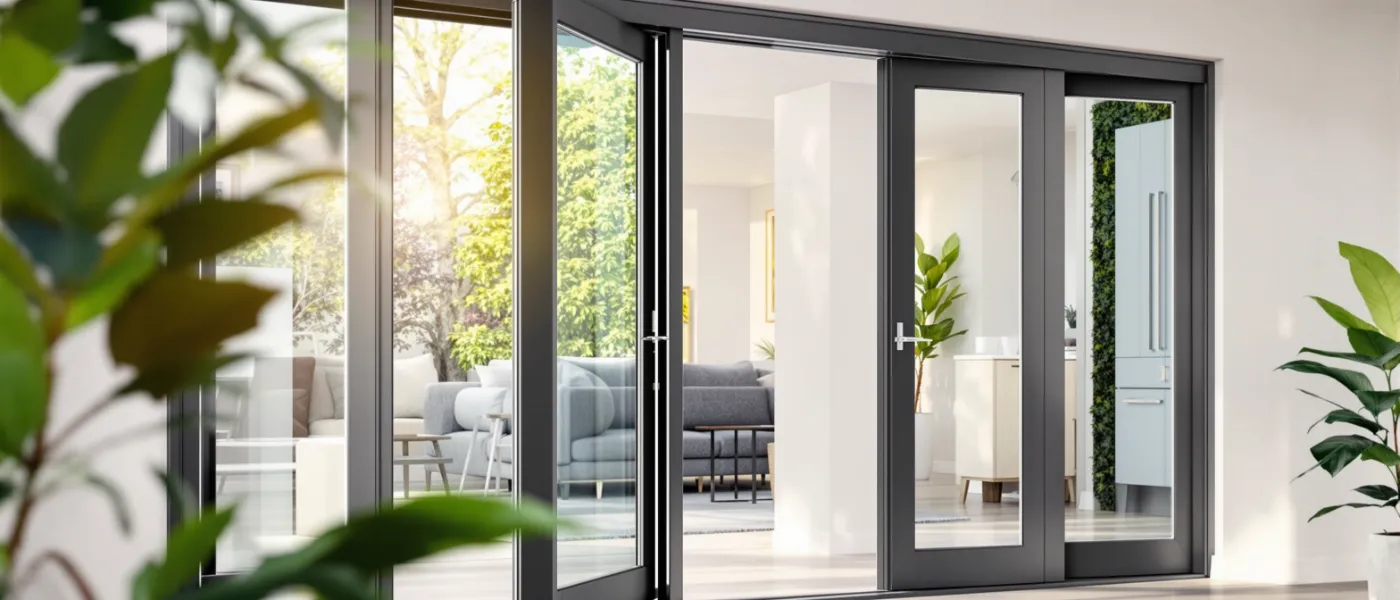
A sliding door operates horizontally along a track rather than swinging on hinges. The door panel (or panels) slides parallel to the wall, stacking against a fixed section or disappearing into a wall cavity. This horizontal movement makes sliding doors exceptionally space-efficient and allows for very large glass areas without the structural compromise of swing arcs.
Sliding door technology has evolved significantly since the aluminium patio doors of the 1970s. Modern systems use precision-engineered rollers, thermal break frames, multi-point locking, and double or triple glazing to deliver security, insulation, and effortless operation. The six types below represent the full spectrum available to London homeowners today.
Need a verified London specialist for your door?
Describe your problem and receive 3-5 itemised quotes from verified, insured specialists in your area. Free, no obligation.
The six main sliding door types
1. Single sliding door
The simplest and most affordable type. One panel slides horizontally along a single track, passing in front of or behind a fixed glass panel. Ideal for smaller openings (1.2m–2.0m width) where budget is a primary concern and space efficiency matters more than maximising the open aperture.
2. Double sliding door (French-style)
Two panels that slide towards each other from opposite sides, meeting in the middle. Both panels can be opened, creating a wide central opening. Popular in Victorian and Edwardian London homes where original French doors are being replaced with more thermally efficient modern equivalents.
3. Triple / stacking slider
Three or more panels that slide and stack against one fixed panel at one end. Typically two panels slide over a fixed central panel, or all three slide to one side. Provides very large open apertures — up to 4.5m wide — making them ideal for London homes with wide garden-facing walls.
4. Pocket sliding door
The panel slides entirely into a concealed wall cavity (the "pocket"), leaving no visible door when open. Requires significant wall depth (typically 100–150mm) and cannot be retrofitted easily. Perfect for modern London extensions and new-builds where clean sightlines are essential.
5. Bypass sliding door
Multiple panels on parallel tracks that slide past each other. Common in wardrobes and internal room dividers but increasingly used for glass partitions in London office-to-residential conversions. Allows access from either side without requiring swing space.
6. Lift-and-slide door
The premium tier of sliding door technology. When the handle is turned, the panel lifts slightly off the seal, allowing effortless sliding even on very large, heavy panels (up to 400kg). When closed, the panel drops back onto the seal, creating exceptional weather tightness and security. Common in high-end London new-builds and premium renovations.
Materials comparison: aluminium vs uPVC vs timber
The frame material determines thermal performance, maintenance requirements, lifespan, and aesthetic character. For London's variable climate and diverse architectural styles, material choice is as important as door type.
| Factor | Aluminium | uPVC | Timber |
|---|---|---|---|
| Thermal performance | Excellent (thermal break) | Good | Very good (naturally insulating) |
| Maintenance | Minimal (powder coat) | Minimal | High (repaint every 3-5 years) |
| Lifespan | 30-40 years | 20-25 years | 40+ years (with maintenance) |
| Aesthetic | Modern, slim sightlines | Functional, chunkier frames | Classic, warm, period-appropriate |
| Cost (typical 2.4m system) | £2,500–£5,000 | £1,200–£2,500 | £3,000–£6,000+ |
| Repair complexity | Moderate (specialist parts) | Low (widely available parts) | Moderate (joinery + hardware) |
| Best for London properties | Modern flats, extensions, new builds | Budget renovations, buy-to-let | Period properties, conservation areas |
Need a verified London specialist for your door?
Describe your problem and receive 3-5 itemised quotes from verified, insured specialists in your area. Free, no obligation.
Best sliding door types for London property styles
London's housing stock is extraordinarily diverse. The right door type depends on your property's era, planning constraints, and how you use your space.
Victorian and Edwardian terraces (1860–1910)
These properties typically have relatively narrow rear openings (2.0–2.8m). Original French doors are common. The best replacement is a double sliding door in aluminium with a wood-effect finish (RAL 8019 or 8023) to maintain period character, or a timber lift-and-slide if budget allows and conservation area rules apply. Avoid uPVC — the chunky frames clash with the fine proportions of period architecture.
Interwar semis and suburbs (1920–1939)
Wider rear openings (2.5–3.5m) and larger gardens make triple/stacking sliders or double sliding doors ideal. Aluminium or premium uPVC both work aesthetically. Many of these properties have been extended with rear additions where a wide sliding system creates excellent indoor-outdoor flow.
Post-war and 1960s–70s estates
Often featuring aluminium-framed sliding doors already — the original 1970s systems are now at end of life. Replace with modern thermal break aluminium single or double sliders. The opening sizes are typically standard (2.1m or 2.4m), making replacement straightforward and cost-effective.
Modern flats and new builds (1990–present)
Wide openings, Juliet balconies, and floor-to-ceiling glass are standard. Lift-and-slide aluminium systems with ultra-slim 20mm sightlines are the premium choice. For budget-conscious buyers, single or double aluminium sliders with standard 35mm frames deliver excellent value. Pocket sliders are increasingly popular in architect-designed extensions.
Conservation areas and listed buildings
Planning permission and listed building consent may require timber frames or aluminium with specific RAL colours. Slim sightlines are often mandated to preserve visual proportions. Always check with your local authority before specifying — consult UK planning permission guidance for details, and see the Which? door and window buying guide for independent advice on choosing frames and glazing. Kensington & Chelsea, Westminster, and Camden are particularly strict.
Average cost ranges in London (2026)
Prices include supply and installation for a typical 2.4m x 2.1m opening with double glazing. Premium brands (Schuco, Reynaers, Origin, Smart Systems) sit at the upper end. Budget systems from lesser-known manufacturers sit at the lower end but carry higher long-term repair risk.
| Door type | uPVC | Aluminium | Timber |
|---|---|---|---|
| Single slider | £800–£1,400 | £1,500–£2,800 | £2,000–£3,500 |
| Double slider | £1,200–£2,200 | £2,200–£4,000 | £3,000–£5,500 |
| Triple / stacking | £2,000–£3,500 | £3,500–£6,000 | £4,500–£7,500 |
| Pocket door | N/A | £2,500–£5,000 | £3,500–£6,500 |
| Lift-and-slide | N/A | £4,000–£8,000+ | £5,000–£9,000+ |
Note: Prices are for standard white, grey, or black finishes. Special RAL colours, wood-effect foils, and dual-colour (different inside/outside) add £200–£600. Triple glazing adds £300–£800. Installation in London carries a 10–20% premium over national averages due to access constraints, parking, and labour rates.
Need a verified London specialist for your door?
Describe your problem and receive 3-5 itemised quotes from verified, insured specialists in your area. Free, no obligation.
How to choose the right sliding door type
Use this decision framework to narrow your choice systematically:
Measure your opening
Width determines panel count. Openings under 1.8m suit single sliders. 1.8m–3.0m suit double. Over 3.0m needs triple/stacking or lift-and-slide. Height affects frame depth and roller specification.
Check planning constraints
Conservation areas, listed buildings, and Article 4 directions may restrict frame materials and sightlines. Contact your borough planning department before specifying.
Set your thermal priority
North-facing rooms and poorly insulated properties need U-values under 1.4 W/m²K. Lift-and-slide and premium aluminium thermal break systems achieve this. Budget uPVC rarely does.
Consider long-term repairability
Premium brands (Schuco, Reynaers, Origin, Smart Systems) have established repair networks in London and parts availability for 20+ years. Obscure budget brands may leave you stranded when rollers or locks fail in year 8.
Get three quotes with specifications
Ensure each quote specifies: frame material, glass specification (U-value, g-value, acoustic rating), hardware brand, installation method, and warranty terms. Compare like-for-like, not headline prices.
Summary
Sliding doors offer London homeowners an unmatched combination of space efficiency, natural light, and garden connectivity. The six main types — single, double, triple/stacking, pocket, bypass, and lift-and-slide — each serve distinct property types, budgets, and design intentions.
For most London properties, aluminium double or triple sliding doors offer the best balance of performance, aesthetics, and long-term value. uPVC remains the budget choice but carries higher repair costs over time. Timber is essential for period properties and conservation areas but demands ongoing maintenance commitment.
When specifying, prioritise thermal performance, planning compliance, and repairability over headline price. A £3,500 aluminium system from a premium brand will cost less to own over 15 years than a £1,800 budget system that requires major repairs in year 6 and full replacement in year 12.
Need a verified London specialist for your door?
Describe your problem and receive 3-5 itemised quotes from verified, insured specialists in your area. Free, no obligation.